
Our Sacred Heritage
The South Indian Bhajana Samaj (SIBS) was founded in May 1927 as a humble gathering for devotional singing — bhajana — by a small group of devout South Indian families residing in Matunga, Mumbai. What began as an intimate assembly of voices raised in praise of the Divine has grown into one of Mumbai's most revered and iconic Hindu temples.
In its earliest days, the Samaj had no permanent structure. Devotees would gather in homes and community spaces to sing traditional bhajans, keerthanas, and stotras in the Carnatic style. The very first portrait of Lord Rama was lovingly procured from the Tanjore district of Tamil Nadu, establishing a deep and abiding connection to the devotional traditions of South India that continues to this day.
"From a humble bhajana gathering in 1927 with a single portrait of Lord Rama from Tanjore, SIBS has blossomed into a magnificent Dravidian temple — a beacon of South Indian spirituality in the heart of Mumbai."
Over the decades, as the South Indian community in Matunga grew, so did the Samaj. Through the generous contributions of countless devotees, the institution gradually transformed from a devotional gathering into a full-fledged temple. The original Tanjore portrait was later supplemented — and eventually replaced — with sacred stone murtis encased in gold, each consecrated through elaborate Vedic rituals.
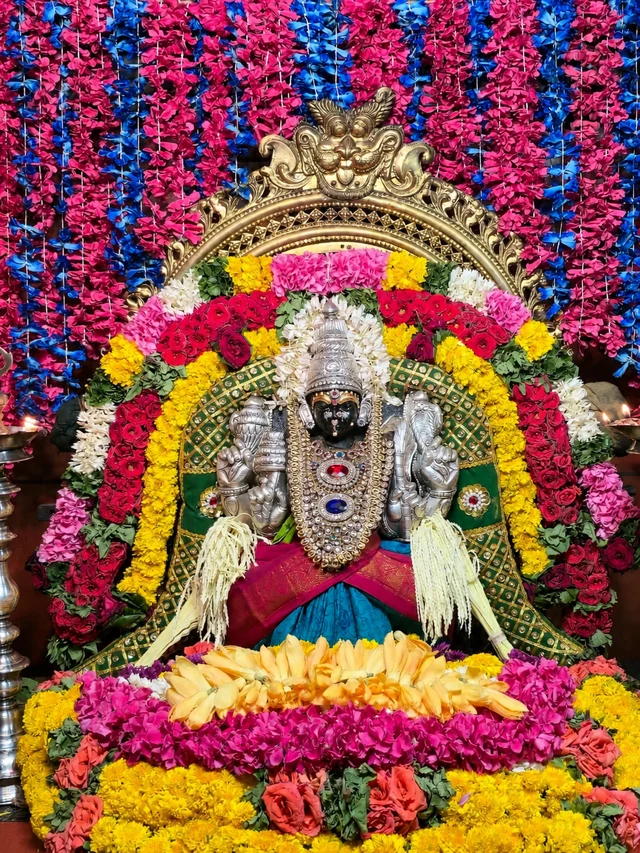
Today, the Samaj houses magnificent shrines to Sri Sita Ramachandra, Sri Raja Rajeshwari Ambal, Sri Maha Ganapathy, Sri Anjaneya, and the Navagraha, drawing thousands of devotees seeking solace, blessings, and authentic South Indian temple worship.
The South Indian Bhajana Samaj Trust
Established in 1933, the Trust is the religious and cultural organisation that carries the Samaj's founding spirit forward. It promotes Hindu traditions—particularly the Bhakti movement and bhajan culture—through worship, spiritual learning, festivals and community service.
Daily puja, group bhajans, Veda Parayanam, scripture discourses, sacred homams and devotee seva create a living bridge between traditional practice and the needs of today's community.
Explore Our ServiceA Journey Through Time
Tracing the milestones of nearly a century of devotion, growth, and divine grace.
The Founding
In May 1927, a small group of devoted South Indian families in Matunga came together to form The South Indian Bhajana Samaj. Their purpose was simple yet profound: to gather regularly for devotional singing (bhajana) and preserve their cherished spiritual traditions in the bustling city of Bombay. The first portrait of Lord Rama was purchased from the Tanjore district in Tamil Nadu, marking the beginning of a sacred legacy.
Growing Roots
The Trust was established in 1933 as the Samaj grew from informal gatherings into an organised religious and cultural institution. Regular bhajana sessions, festival celebrations, and community events became integral to the faithful, while the dream of a permanent temple structure took shape.
The Temple Takes Form
The 1960s saw the realisation of a long-cherished dream — the construction of a dedicated temple building on Telang Road. Through the tireless fundraising efforts and generous donations of the community, the Samaj finally had a permanent home. The building was designed to embody the principles of traditional Dravidian temple architecture, bringing the grandeur of South Indian sacred spaces to Mumbai.
Expansion & Consecration
The temple underwent significant expansion and beautification during these decades. New shrines were added, and the sacred stone murtis of Sri Sita Ramachandra, Sri Raja Rajeshwari Ambal, and Sri Maha Ganapathy were consecrated through elaborate Vedic rituals. The Navagraha shrine and the sanctum of Sri Anjaneya further enriched the temple's spiritual offerings.
The Rajagopuram Rises
The construction of the iconic Rajagopuram — the towering Dravidian entrance gateway adorned with vibrant, intricately carved and painted sculptures of Hindu deities — transformed the temple's facade into a breathtaking landmark. Rising above the Matunga skyline, it became a symbol of the community's devotion and a beloved visual beacon for devotees and visitors alike.
Maha Samprokshana Poornabhishekam
In April 2022, the temple celebrated a historic Maha Samprokshana Poornabhishekam — a grand re-consecration ceremony performed after extensive renovations and restoration work. This sacred event, conducted over several days with elaborate Vedic rituals by eminent priests, renewed the divine energies of all the shrines and marked the beginning of a glorious new chapter in the temple's history.
Our Chief Priest
The spiritual heart of our temple, guiding devotees with wisdom, devotion, and meticulous adherence to Agamic traditions.
Brahmasri M.V. Ganesh Sastrigal
Chief Priest (Pradhana Archaka)
Brahmasri M.V. Ganesh Sastrigal (Sastry) serves as the Chief Priest of The South Indian Bhajana Samaj, bringing deep scholarly knowledge of the Vedas, Agamas, and sacred rituals to every ceremony he performs. His unwavering dedication to maintaining the highest standards of traditional worship is evident in the meticulous precision with which each puja, abhishekam, and homam is conducted.
Under his spiritual guidance, the temple has upheld the authentic Agamic traditions of South Indian temple worship, ensuring that every ritual — from the daily Suprabhatam at dawn to the Ekantha Seva at night — is performed in accordance with the sacred scriptures. His profound devotion and gentle demeanour have endeared him to countless devotees who seek his blessings and counsel.
Brahmasri Sastrigal plays a central role in all major temple festivals and special ceremonies, including the grand Rama Navami celebrations, Navaratri, and the historic Maha Samprokshana Poornabhishekam of 2022. His presence infuses every sacred occasion with an atmosphere of deep reverence and divine connection.
Trust & Management
Dedicated trustees and volunteers who ensure the temple's continued growth, maintenance, and service to the community.
Board of Trustees
The temple is governed by a dedicated Board of Trustees comprising respected members of the community. They provide visionary leadership for temple development, financial stewardship, and strategic planning to ensure the Samaj's enduring legacy.
Managing Committee
The Managing Committee oversees the daily operations of the temple, including worship schedules, festival planning, maintenance of the premises, and coordination of community services such as Annadanam and cultural programmes.
Devoted Volunteers
Hundreds of selfless volunteers form the backbone of the Samaj, contributing their time and talents to festival preparations, flower decorations, kitchen service, crowd management, and countless other acts of devotion that keep the temple vibrant.
Our Mission
The South Indian Bhajana Samaj is committed to preserving and propagating the rich spiritual heritage of South India in Mumbai. Our mission is threefold:
Spiritual Nourishment
To provide an authentic centre for daily worship, Vedic rituals, and devotional practices conducted in strict accordance with Agamic traditions, offering spiritual sustenance to devotees of all backgrounds.
Cultural Preservation
To safeguard and promote the classical arts, music, dance, and literary traditions of South India through festivals, cultural programmes, Carnatic music concerts, and Bharatanatyam performances throughout the year.
Community Service
To serve the community through Annadanam (food distribution), educational support, charitable activities, and by fostering a welcoming environment where people from all walks of life can find peace, purpose, and belonging.
Matunga — The Sacred Neighbourhood
The temple's location in Matunga is itself steeped in sacred history. Often called "Little South India" of Mumbai, Matunga has been the cultural heartland of the South Indian community in the city for over a century. Its streets are lined with traditional restaurants, silk saree shops, flower markets, and the unmistakable aroma of filter coffee and fresh jasmine.
But the name "Matunga" carries a far deeper significance. It is believed to derive from Mathanga Maharishi — a revered sage mentioned in the Ramayana. According to tradition, Maharishi Mathanga had his ashram in this region, and it is from his name that the area derives its identity. The Ramayana describes Mathanga Maharishi as a great rishi in the Kishkindha Kanda, whose ashram was so sacred that even the mighty Vali dared not enter its precincts.
"The very ground on which Matunga stands is believed to be sanctified by Mathanga Maharishi's tapas (penance). That the South Indian Bhajana Samaj, dedicated to Lord Rama, should flourish on this sacred soil is a profound testament to the divine design."
This confluence of ancient sanctity and living tradition makes SIBS more than just a temple — it is a sacred continuum, connecting the spiritual energies of a Ramayana-era sage to the daily devotions of thousands of modern-day bhaktas. Every prayer offered within these walls resonates with the echoes of millennia.
The South Indian Bhajana Samaj
Visit Our Temple
We welcome all devotees and visitors to experience the sacred atmosphere of The South Indian Bhajana Samaj. Come for the darshan, stay for the divine peace.
Address: No. 400, Telang Road, Near Flower Market, Matunga East, Mumbai — 400019
Phone: +91 22 2401 1719 / +91 22 2401 1666